
Innovation, Forward.

Innovation at GANNI is about shaping the future of fashion through three connected pillars: Fabrics of the Future, Circular Business Models, and Digital Innovation.

We don’t believe the most meaningful change will come from within the existing fashion system alone. Instead, our approach is built on externalised innovation – partnering with startups, scientists, creatives, and cross-industry collaborators to challenge conventions and unlock new possibilities.
Since 2019, Fabrics of the Future has been our in-house lab for exploring next-generation materials, combining creativity with sustainability through these partnerships. Circular business models, from resale to repair, make it easier and more rewarding for our community to extend the life of their GANNI pieces. And digital innovation, led by the upcoming Digital Product Passport, is creating smarter, more transparent ways to track, care for, and engage with our products.

Fabrics of the Future
GOAL: 10% of Materials in GANNI collections are Fabrics of the Future by 2028
GANNI’s Fabrics of the Future programme was set up in 2019 to research, test, and eventually scale innovative materials that challenge conventional methods, paving the way for the future of fashion. That same year, Textile Exchange highlighted a critical “innovation gap” in its reporting, pointing to the urgent need for next-generation materials and systems to decarbonise the industry — emphasising that existing fibres and practices alone would not deliver the required emissions reductions. Fabrics of the Future was created in direct response to this challenge.
Our goal remains that 10% of the materials we use should come from Fabrics of the Future, as this represents the single largest opportunity to reduce our carbon emissions, while also driving positive change in other areas — such as enabling full supply chain traceability from raw material level.
In 2025, Fabrics of the Future accounted for 4% of the materials we used, up from 3% in 2024. It would be unrealistic not to acknowledge the significant challenge these next-generation materials and technologies are facing today, particularly around investment and adoption by the fashion industry, so we are cautious about expressing that 2026 will lead to a further increase, but we are working towards it.
Integrating Fabrics of the Future into our collections does not come without challenges, specifically related to quality standards, premium prices, availability, and supply chain implementation. In the current volatile fashion industry environment, it is normal to see next-gen innovators struggle to scale their business and achieve widespread adoption. Therefore, we need to work, test, and collaborate with them for longer time periods, to ensure we reach commercial feasibility and viability, without compromising at all on quality and durability. Currently, we have more than 70 innovative materials in our portfolio, across different material areas. At GANNI, we classify the innovators in four different phases based on their maturity stage and collaboration mode with our teams.
In Exploration
Materials that we find exciting and are currently exploring.
Promising
Materials with clear potential that we're evaluating for GANNI products. We're prototyping and developing these to bring the material closer to a possible launch.
In Exploration
Materials we’ve either showcased on the runway but aren’t ready for commercial launch, or materials previously used in collections but not consistently. This stage is very critical for the commercialization of Fabrics of the Future, since it is the moment to tackle and overcome the main barriers to scale.
Graduates
Materials that have successfully launched and are now regularly used across collections. We know how to work with these materials, and we’re excited to feature them season after season.
Fabrics of the Future used in 2025
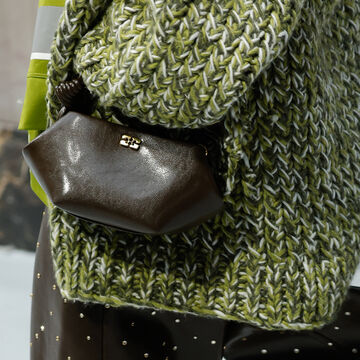
OleatexTM
Innovative alternative to synthetic materials
Made by Turkish-based Oleago®
Oleatex™ is an innovative alternative to synthetic materials, using olive oil production waste in Turkey. This material is crafted by blending the byproducts of olive oil production to form a bio-based polyurethane (PU) top coating and then bonding it to textile backings such as cotton, viscose, and recycled polyester. By repurposing waste from the olive oil industry, Oleatex™ transforms what woul.
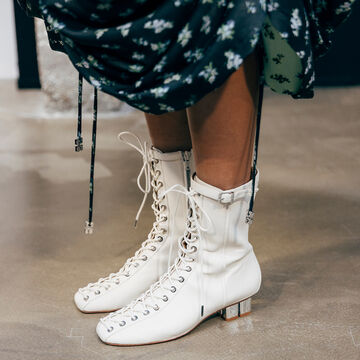
Pelinova®
Recycled leather
Made by France-based Recyc Leather™
PELINOVA® is bringing a fresh perspective to leather by reclaiming leather scraps from the fashion and upholstery industries and blending them with TENCEL™ Lyocell, instead of traditional synthetic materials. This innovative process allows Pelinova® to create a new kind of recycled leather that reduces reliance on virgin resources. GANNI phased out the use of virgin leather in 2023 and introduced PELINOVA® as part of its collection of virgin-leather alternatives.

Cycora®
A regenerated polyester innovation
Made by Los Angeles-based Ambercycle
Cycora is redefining what recycled materials can be, turning discarded textiles into the clothing of the future. Made entirely from textile waste, using advanced molecule regeneration technology, textiles are brown down to the molecular level and transformed into Cycora yarns. While traditional polyester is made of virgin fossil fuels, and most recycled polyester comes from plastic bottles, Cycora is crafted purely from discarded garments.
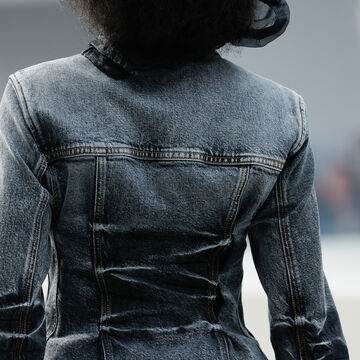
Circulose®
Innovative Cotton
Made by Swedish-based Circulose
Circulose is changing how we repurpose and revalue waste, turning discarded cotton textiles into the clothing of the future. Circulose, a Swedish textile recycling company, recovers cellulose fibres from worn-out cotton jeans and cotton production scrapers through a chemical recycling process, transforming them into new high-quality fibres. While conventional cotton is grown, Circulose is created from discarded garments, proving that waste can become a valuable resource.
Oleatex®
Innovative alternative to synthetic materials
Made by Turkish-based Oleago®
Oleatex™ is an innovative alternative to synthetic materials, using olive oil production waste in Turkey. This material is crafted by blending the byproducts of olive oil production to form a bio-based polyurethane (PU) top coating and then bonding it to textile backings such as cotton, viscose, and recycled polyester. By repurposing waste from the olive oil industry, Oleatex™ transforms what woul.
Pelinova®
Recycled leather
Made by France-based Recyc Leather
PELINOVA® is bringing a fresh perspective to leather by reclaiming leather scraps from the fashion and upholstery industries and blending them with TENCEL™ Lyocell, instead of traditional synthetic materials. This innovative process allows Pelinova® to create a new kind of recycled leather that reduces reliance on virgin resources. GANNI phased out the use of virgin leather in 2023 and introduced PELINOVA® as part of its collection of virgin-leather alternatives.
Circulose®
Innovative Cotton
Made by Swedish-based Circulose
Circulose is changing how we repurpose and revalue waste, turning discarded cotton textiles into the clothing of the future. Circulose, a Swedish textile recycling company, recovers cellulose fibres from worn-out cotton jeans and cotton production scrapers through a chemical recycling process, transforming them into new high-quality fibres. While conventional cotton is grown, Circulose is created from discarded garments, proving that waste can become a valuable resource.
Cycora®
A regenerated polyester innovation
Made by Los Angeles-based Ambercycle
Cycora is redefining what recycled materials can be, turning discarded textiles into the clothing of the future. Made entirely from textile waste, using advanced molecule regeneration technology, textiles are brown down to the molecular level and transformed into Cycora yarns. While traditional polyester is made of virgin fossil fuels, and most recycled polyester comes from plastic bottles, Cycora is crafted purely from discarded garments.

Circular Business Models
Refining Circularity: A Service-First Focus on Resale & Repair
GANNI has experimented with a wide range of circular business models. As we move into 2028, we’re sharpening our focus: doubling down on Resale and Repair, exclusively powered through trusted external partners. This isn’t just a sustainability initiative – it’s a servicet-first experience for our customers, making it easier and more rewarding for them to extend the life of their GANNI pieces
GOAL: 1 Global repairs solution by 2028
Since 2022, we have partnered with the repairs and alterations service Sojo, to offer this service to our London-based community. The service helps customers extend the life of their garments through professional repairs and alterations, reinforcing our commitment to circular fashion and responsible consumption.
Looking ahead to 2028, we plan to scale this initiative beyond London and make repairs available to our global community. By embedding repair services more deeply into the customer journey, we can empower people to care for and keep their GANNI pieces longer. Watch this space.
GOAL: 1 Global resale solution by 2028
After experimenting with different resale services, in 2025, we partnered with Vestiaire Collective to give our community a simple way to give pre-loved GANNI pieces a second life. Customers can resell items through the platform and receive a GANNI gift card, making it easier to keep garments in circulation. By integrating resale into our ecosystem, we encourage more circular ways of engaging with fashion and help extend the lifespan of our products. We’re happy with how the partnership is going and will continue spreading the word throughout 2026 and beyond.


Digital Innovation
GOAL: 1 Digital Product Passport solution by 2028
A digital product passport is a unique digital record for each garment, capturing information like materials, production processes, care instructions, and end-of-life options. For fashion brands, this is set to transform the industry by making transparency, traceability, and circularity standard expectations. The EU is about to make digital product passports a legal requirement, which means all brands will need to provide detailed, verified information about their products. At GANNI, implementing a digital product passport will mean connecting our design, production, and repair systems so every piece carries a clear, verifiable story. It will allow customers to understand the journey of their GANNI items and access services like resale or repair more easily. While we are just starting this work, it’s an important step toward greater transparency-helping create a more level playing field and making it easier for customers to navigate and compare sustainability claims across brands.